Bihar Museum Biennale 2021: A Comprehensive Overview of India's Landmark Cultural Event
The Bihar Museum Biennale 2021 was a major milestone in Indian cultural life — a multi-day platform held in Patna that brought together museum professionals, scholars, curators, artists, and the general public under one roof to examine what museums mean in contemporary South Asia. At a time when institutions across the world were rethinking their purpose and relationship with communities, Bihar Museum chose to stage a biennale that was both intellectually ambitious and genuinely open to wider audiences.
What Is the Bihar Museum Biennale?
The Bihar Museum Biennale is a recurring cultural event hosted by Bihar Museum in Patna, designed to stimulate dialogue around museology, heritage, and contemporary art practice in India and beyond. Held every two years, it functions as a convergence point for museum professionals, academic thinkers, and the public — combining exhibitions, symposia, and outreach programs into a sustained cultural conversation.
Unlike a standard museum exhibition or a conventional art fair, the Biennale format allows Bihar Museum to structure an extended, thematic inquiry. Each edition takes up a specific set of questions about culture, identity, or institutional practice, then explores those questions through multiple formats simultaneously — on gallery walls, in lecture halls, and in open public spaces.
The idea of a biennale rooted in museum practice rather than purely commercial art is relatively unusual in the South Asian context. Most biennales in India focus on contemporary art as a market or spectacle. The Bihar Museum Biennale, by contrast, foregrounds the museum itself as an object of reflection — asking what it collects, who it serves, and what stories it chooses to tell.
Bihar Museum: The Institution Behind the Biennale
Bihar Museum is the state museum of Bihar, located in Patna, and it stands as one of the most architecturally and programmatically ambitious public cultural institutions built in India in recent decades. Designed by the Japanese architectural firm Maki and Associates in collaboration with Opolis Architects, the building opened to the public in 2015 and has since drawn national and international attention for its design quality and curatorial seriousness.
The museum's permanent collection spans archaeological material from the Mauryan and Gupta periods, Buddhist art and sculpture, natural history objects, and contemporary works — a range that reflects Bihar's extraordinary historical depth. The Didarganj Yakshi, one of the finest examples of Mauryan polished stone sculpture, is among its most celebrated holdings.
Beyond its collection, Bihar Museum has worked to establish itself as a model for what Indian public museums can be: accessible, educationally serious, and committed to community engagement. The Biennale is central to that ambition. It positions the museum not just as a repository of objects, but as an active participant in national conversations about culture and identity.
Patna itself provides a meaningful backdrop. As a city with layered histories — Mauryan, Mughal, colonial, and post-Independence — it embodies many of the questions the Biennale asks about heritage and memory.
The 2021 Edition: Theme and Vision
The 2021 Bihar Museum Biennale oriented its programming around questions of cultural continuity, memory, and the evolving role of museums in democratic societies — themes made especially pressing by the disruptions of the preceding year. The pandemic had forced institutions globally to confront questions of access, relevance, and resilience, and the 2021 edition engaged those questions with directness and depth.
The curatorial vision was not narrowly nostalgic. Rather than simply celebrating Bihar's historical heritage, the Biennale used that heritage as a lens through which to examine the present — how living communities relate to ancient histories, how contemporary artists respond to archaeological material, and how a museum can hold both without flattening either.
This tension between the historical and the contemporary gave the 2021 edition a productive energy. Programming did not separate "art" from "heritage" as if they were incompatible. Instead, the Biennale treated them as aspects of the same ongoing cultural project, connected by the institution of the museum and the communities it serves.
Exhibitions and Highlights
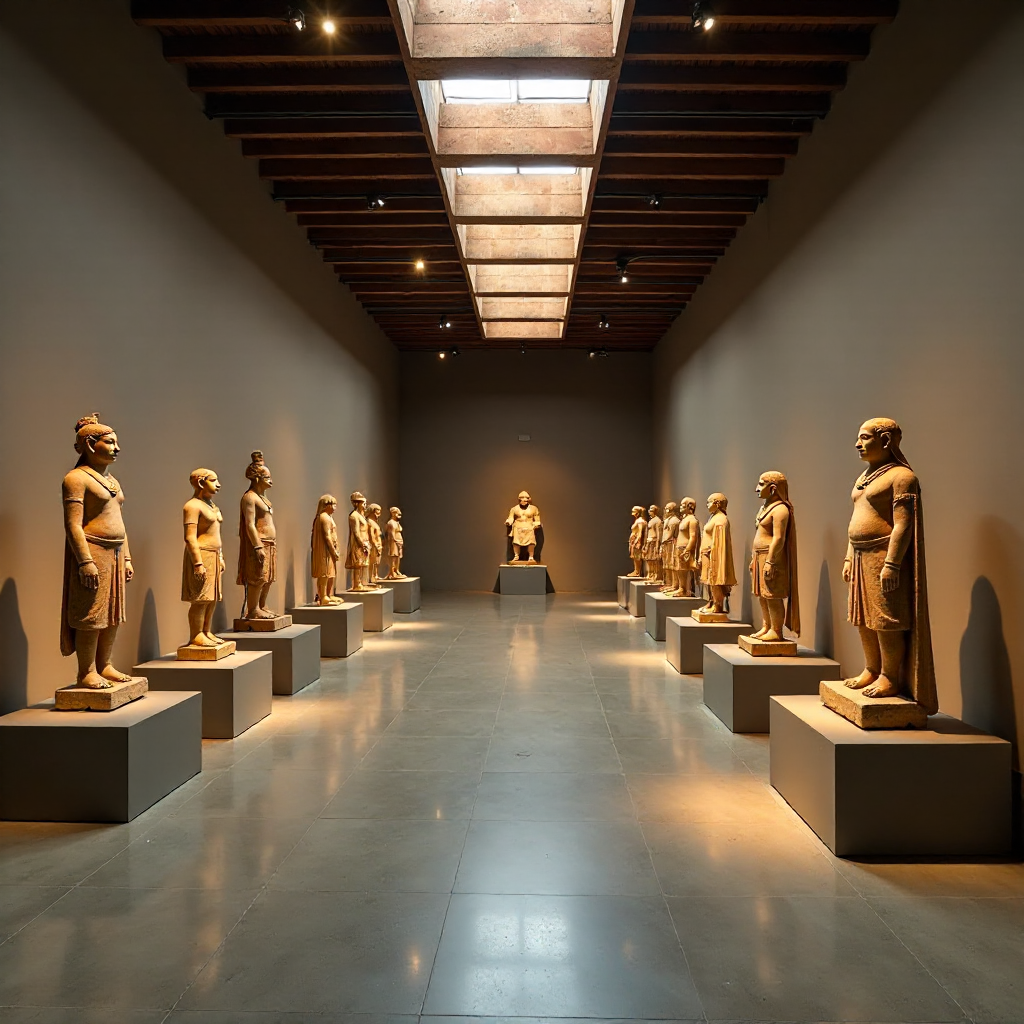
The 2021 Biennale's exhibitions spanned a range of formats and historical periods, reflecting the breadth of Bihar Museum's own curatorial ambitions. Displays drew on the museum's archaeological holdings while also presenting contemporary works that responded to or extended those historical narratives.
Highlights included presentations of material culture from Bihar's ancient civilizations alongside contemporary artistic responses to those traditions. The juxtaposition was deliberate: it asked visitors to consider how artistic and cultural production flows across time, and what it means to inherit a tradition rather than simply observe it behind glass.
Some of the most compelling elements of the exhibition program addressed intangible cultural heritage — folk traditions, craft practices, and living cultural forms that exist outside the conventional museum collection but are no less significant to Bihar's cultural identity. Bringing these into a museum context raised honest questions about what gets preserved, what gets displayed, and who makes those decisions.
The Biennale also featured presentations by visiting institutions and cultural organizations, creating a comparative dimension that placed Bihar Museum's collection and approach in dialogue with practices from other parts of India and internationally.
Conferences, Symposia, and Public Programs
The intellectual core of the Bihar Museum Biennale 2021 was its conference and symposium programming, which brought together curators, museum directors, scholars, and cultural policy thinkers for substantive professional dialogue. These sessions addressed some of the most pressing questions facing Indian museums today.
Panel discussions and lectures covered topics including decolonization of museum collections, community co-curation, digital access strategies, and the relationship between archaeological heritage and living communities. Speakers included senior figures from Indian and international museum practice, contributing both comparative perspective and specific expertise.
Public programs ran alongside the professional conference, ensuring that the Biennale's intellectual content reached beyond specialist audiences. Guided tours, workshops, and educational sessions connected families, school groups, and general visitors to the ideas animating the exhibitions. This dual structure — rigorous professional programming alongside accessible public engagement — is one of the Biennale's defining features, and it reflects Bihar Museum's broader commitment to being genuinely open rather than institutionally inward-looking.
The symposium format also created space for honest debate. Not every session arrived at consensus, and that was the point: the Biennale treated professional disagreement as productive rather than problematic.
Significance for Indian Museum Practice
The Bihar Museum Biennale matters for Indian museology because it models a form of institutional ambition that is relatively rare: a publicly funded regional museum taking the lead on national cultural conversations rather than waiting for metropolitan institutions to set the agenda.
For much of independent India's history, the cultural conversation has been dominated by institutions in Delhi, Mumbai, and Kolkata. Bihar Museum's emergence as a serious curatorial force — and the Biennale as its most visible expression — represents a meaningful shift. It signals that regional cultural identity can be a source of intellectual strength rather than provincial limitation.
The Biennale's model also challenges the separation between heritage museums and contemporary art spaces that has often fragmented the Indian cultural sector. By holding both in productive tension, it demonstrates that this separation is a choice rather than a necessity — and that institutions can be richer for refusing it.
For curators and museum professionals across India, the Biennale serves as a reference point and a gathering place. The professional networks formed and strengthened through its conference programming have real consequences for how museums across the country develop their practices. You can explore more about the broader landscape of museum practice through ICOM, the International Council of Museums, which provides context for global museological standards and debates that the Biennale engages with directly.
Legacy and What to Expect Going Forward
The 2021 edition of the Bihar Museum Biennale strengthened the event's standing as one of the most thoughtful recurring cultural platforms in India. Its legacy lies less in any single exhibition or speaker than in the cumulative work of institution-building it represents — each edition adding another layer to Bihar Museum's identity as a place where serious cultural thinking happens.
Going forward, the Biennale's continued development will likely deepen its international connections while remaining rooted in Bihar's specific cultural context. The tension between the local and the global is one the event has navigated with intelligence, and there is every reason to expect that tension to remain generative rather than strained.
For Bihar itself, the Biennale has consequences beyond the cultural sector. A world-class museum event brings scholars, professionals, and cultural tourists to Patna — contributing to the city's profile and demonstrating that serious cultural investment in India's historically underserved regions is both possible and worthwhile.
The next edition of the Biennale will face the challenge every recurring cultural event encounters: how to build on what came before without simply repeating it. Given Bihar Museum's track record, the expectation is for continued ambition and continued willingness to ask difficult questions about what museums are for and who they serve.
Frequently Asked Questions
What is the Bihar Museum Biennale and how often does it take place?
The Bihar Museum Biennale is a recurring cultural platform hosted by Bihar Museum in Patna that combines exhibitions, academic conferences, and public programs focused on museum practice, cultural heritage, and contemporary art. As its name suggests, it takes place every two years.
Where is Bihar Museum located and what does it collect?
Bihar Museum is located in Patna, the capital of Bihar, in eastern India. Its collection covers archaeological material from the Mauryan and Gupta periods, Buddhist sculpture, natural history objects, and contemporary art — reflecting the state's extraordinary historical and cultural range.
Who can attend the Bihar Museum Biennale — is it open to the public?
Yes, the Bihar Museum Biennale is designed to be broadly accessible. While parts of the program — particularly the professional conferences and symposia — are oriented toward museum professionals and scholars, the exhibitions and many public programs are open to general visitors, including families and school groups.
What kinds of events and programs are part of the Biennale?
The Biennale typically includes thematic exhibitions drawing on the museum's collection and visiting presentations, academic conferences and panel discussions with curators and museum professionals, public lectures, guided tours, educational workshops, and outreach programs for community audiences.
How does the Bihar Museum Biennale compare to other biennales in India?
Most biennales in India focus primarily on contemporary visual art with a commercial or spectacle dimension. The Bihar Museum Biennale is distinct in centering the museum as an institution — its practices, responsibilities, and relationship to communities — while also engaging contemporary art. This gives it a more explicitly intellectual and museological character than most comparable events in the country.