How Digital Innovations Are Reshaping Museum Experiences in the Post-2021 Era
Something shifted in the global museum world around 2021 — and it wasn't a gradual drift. The pandemic had forced institutions to experiment at speed, and by the time physical doors reopened, the appetite for purely traditional exhibition formats had changed permanently. Visitors had experienced online collections, virtual walkthroughs, and digital storytelling. They came back expecting more.
A Turning Point — Why 2021 Marked a New Chapter for Museums
The year 2021 was a genuine inflection point for cultural institutions worldwide. Museums that had survived closures by launching digital programs discovered those programs weren't emergency measures — they were new permanent channels for audience engagement.
The Bihar Museum Biennale 2021 stands as a meaningful landmark in this shift, particularly within South Asia's cultural landscape. Held in Patna, the Biennale brought together museum professionals, curators, and cultural thinkers to examine how institutions could evolve — not just survive. Digital innovation featured prominently in those conversations, framing technology not as a substitute for physical culture, but as a way to extend its reach and deepen its resonance.
What made 2021 distinct was the combination of necessity and ambition. Institutions weren't just digitizing out of obligation — they were beginning to ask harder questions about who museums are actually for, and how digital tools could help answer that question more honestly.
From Physical Halls to Hybrid Spaces — The Rise of the Hybrid Exhibition Model
The hybrid exhibition model is now the dominant framework for forward-thinking museums: a design approach that treats in-person and online audiences as equally valid, rather than prioritizing one and tolerating the other.
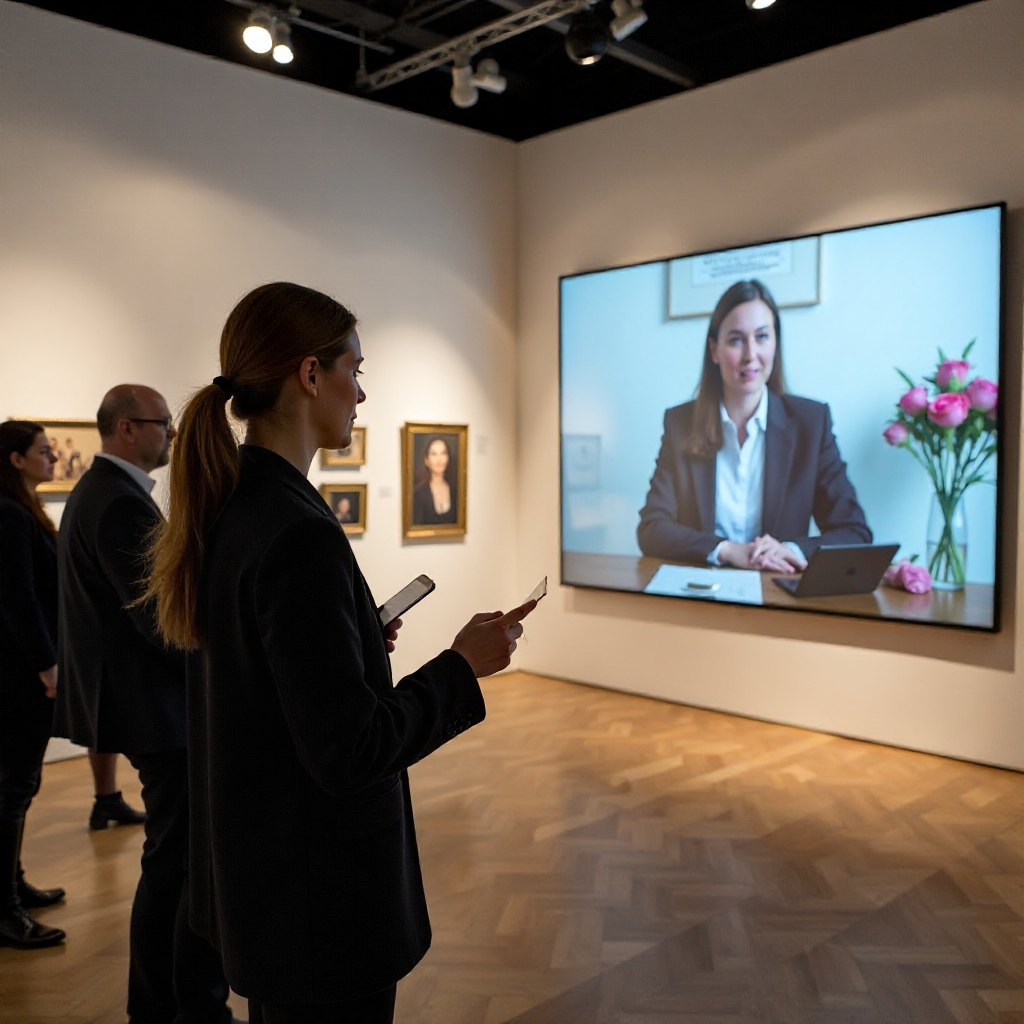
In practice, this means exhibitions are conceived with dual audiences from the start. A physical installation in Patna or London might simultaneously stream its opening events, offer a synchronized virtual tour, and maintain a permanent digital counterpart with supplementary content unavailable on the gallery floor. Museums like the Smithsonian and the Victoria & Albert have demonstrated how this works at scale, but regional institutions are finding their own versions of the model.
Virtual tours have matured considerably since the early pandemic-era 360° walkthroughs. High-resolution photogrammetry now allows institutions to recreate gallery environments with enough fidelity that remote visitors can examine brushwork or read artifact labels — details that previously required physical presence. Live-streamed curator talks, multilingual audio guides accessible via QR codes, and on-demand lecture archives have all become standard components of the hybrid stack.
The honest trade-off: hybrid programming requires sustained investment in production infrastructure and digital staff — resources that many regional museums simply don't have in abundance. The model works best when institutions treat it as a long-term commitment rather than a project with a defined endpoint.
Augmented and Virtual Reality as Storytelling Tools
AR and VR have moved from novelty to genuine narrative instrument in museum contexts. When used well, they allow institutions to tell stories that physical objects alone cannot carry.
Consider what augmented reality makes possible: a visitor holds a tablet over a 2,000-year-old terracotta fragment and watches a reconstruction of the original vessel materialize around it. Or they stand in a gallery displaying medieval manuscripts and see, overlaid on the page, a scribe's hand completing the text in real time. These aren't hypothetical — institutions including the British Museum and the National Museum of Natural History have deployed AR layers that transform static objects into dynamic narratives.
Virtual reality offers something different: full environmental immersion. VR reconstructions of archaeological sites — Mohenjo-daro, ancient Nalanda, the streets of Pompeii — allow visitors to inhabit contexts that no longer physically exist. For museums focused on South Asian heritage, this has particular power. Bihar's own extraordinary historical legacy, from the Mauryan Empire to the Buddhist universities of Vikramshila, lends itself to immersive reconstruction in ways that flat panels and display cases struggle to match.
The risk worth naming: VR experiences require significant development budgets, and headset-based formats can exclude visitors with certain physical or sensory conditions. Institutions doing this thoughtfully are building accessible alternatives alongside the immersive versions.
Interactive Installations and Participatory Design
Interactive installations are redefining the visitor's role — from passive observer to active participant. This shift is more than aesthetic; it changes the cognitive and emotional relationship between a person and cultural content.
Sensor-based installations respond to movement, touch, or voice. A visitor's path through a gallery might alter the soundscape around them, or their proximity to an artifact might trigger contextual information projected onto the surrounding wall. These systems, increasingly built on affordable sensor hardware and open-source software, are no longer exclusive to large institutions with seven-figure technology budgets.
Co-created installations take participation further. Some museums now invite communities — particularly those whose heritage is being represented — to contribute content, recordings, or objects that become embedded in the exhibition itself. This approach directly addresses a longstanding critique of institutional museum culture: that collections speak about communities rather than with them.
Participatory design also improves retention. Research in educational psychology consistently shows that active engagement produces stronger memory formation than passive observation — a practical argument for interactive formats that goes beyond novelty.
Digitizing Cultural Heritage — Preservation Meets Public Access
Cultural heritage digitization serves two distinct purposes that often get conflated: preservation and access. Both matter, but they require different approaches and different conversations.
On the preservation side, 3D scanning and photogrammetry now allow institutions to create millimeter-accurate digital records of fragile artifacts — records that survive even if the physical object deteriorates or is lost. The Google Arts & Culture platform has partnered with hundreds of institutions globally to build high-resolution digital archives, and initiatives like Europeana have aggregated millions of digitized objects from European collections into a single publicly accessible repository.
Access is where the democratization argument becomes most compelling. A student in a rural district of Bihar, with no realistic means of visiting a major metropolitan museum, can now browse digitized manuscripts, zoom into artifact details, and read curatorial notes — all from a smartphone. This isn't a replacement for the physical experience, but it's a genuine expansion of who gets to engage with cultural heritage.
The challenge is sustainability. Digitization projects require ongoing maintenance: servers, format migration as technology evolves, and staff to manage metadata. Institutions that launch digital archives without a maintenance plan often find their collections slowly degrading in digital form — a different kind of preservation failure.
Museum Conferences and Biennales as Incubators of Digital Innovation
Museum conferences and biennales function as idea-sharing ecosystems — places where digital strategies get stress-tested, demonstrated, and carried back to home institutions by the professionals who attend.
The Bihar Museum Biennale 2021 exemplified this function. By convening curators, technologists, policymakers, and cultural practitioners in a single forum, the event created conditions for cross-institutional learning that individual museums rarely generate internally. Conversations about digital access, regional heritage representation, and the future of exhibition design don't happen in isolation — they need forums like this to gain momentum and translate into practice.
International gatherings like the International Council of Museums (ICOM) conferences and regional equivalents serve similar functions at different scales. What distinguishes biennales focused on specific cultural contexts — South Asian heritage, postcolonial museum practice, community-centered curation — is their ability to surface challenges and solutions that global platforms sometimes miss.
Increasingly, these events are themselves adopting hybrid formats: broadcasting sessions online, publishing proceedings as open-access documents, and creating digital communities that persist between physical gatherings. The conference becomes a continuous conversation rather than a periodic event.
The Road Ahead — Challenges and Opportunities in Digital Museum Culture
Digital innovation in museums carries genuine promise, but the field is still working through real structural barriers that enthusiasm alone won't resolve.
Cost and infrastructure remain the most immediate constraints. High-quality VR development, interactive installation hardware, and robust digital archive systems require capital investment that many regional and community museums cannot access through standard funding channels. Grant ecosystems are slowly adapting, but the gap between well-resourced flagship institutions and smaller museums continues to widen.
Digital equity is a related concern. Building a sophisticated virtual tour serves little purpose if the intended audience lacks reliable broadband access or device ownership. Museums serious about widening access need to think carefully about which digital formats actually reach underserved communities — and which ones inadvertently reinforce existing cultural divides.
There's also the question of authenticity. Some museum professionals and visitors worry that digital mediation distances people from the irreducible experience of standing before an original object — the scale, the texture, the accumulated time embedded in a physical artifact. This concern deserves respect. The goal isn't to replace that experience but to complement it, and to extend something meaningful to those who can't reach the gallery door.
The opportunity, taken seriously, is significant: museums that get digital innovation right don't just survive demographic and technological change — they become more central to their communities than they've been in decades.
Frequently Asked Questions
What digital technologies are museums most commonly using post-2021?
The most widely adopted technologies include virtual tours, augmented reality overlays, interactive touchscreen installations, high-resolution digital archives, and hybrid live-streaming for events and openings. QR-code-linked audio guides have also become near-universal in mid-to-large institutions.
How did the Bihar Museum Biennale 2021 contribute to conversations about digital innovation?
The Bihar Museum Biennale 2021 served as a regional forum where museum professionals across South Asia could discuss digital strategies in the context of local heritage and institutional realities. It helped position digital access not as a Western import but as a tool relevant to India's own rich and diverse cultural landscape.
Can digital museum experiences replace the value of visiting in person?
No — and most museum professionals aren't trying to make that argument. Digital experiences expand access and complement physical visits; they rarely replicate the sensory and emotional depth of standing before an original work or artifact. The most effective institutions treat both as distinct, valuable modes of engagement.
How are smaller or regional museums adopting digital tools with limited budgets?
Many smaller institutions are starting with low-cost entry points: smartphone-compatible virtual tours built on platforms like Google Street View, basic QR-code audio guides, and social media as a distribution channel for digital content. Partnerships with universities and technology companies have also helped some regional museums access expertise they couldn't otherwise afford.
What role do museum conferences play in spreading digital best practices?
Conferences and biennales function as accelerators — they compress years of isolated experimentation into shared knowledge that practitioners can take home and apply. Events like the Bihar Museum Biennale create space for peer learning, honest assessment of what's working, and collaborative problem-solving across institutional boundaries.