In Their Own Words: Interviews with Featured Artists at Bihar Museum Biennale 2021
The Bihar Museum Biennale 2021 brought together some of the most compelling voices in contemporary Indian art under one roof in Patna — and the conversations that emerged from those encounters are still worth sitting with. This article gathers the perspectives, reflections, and creative thinking that defined the event, drawing on artist statements, public programming exchanges, and the curatorial framework that shaped the 2021 edition.
What Is the Bihar Museum Biennale 2021?
The Bihar Museum Biennale is a recurring cultural event hosted by the Bihar Museum in Patna, designed to position the institution as a living hub for contemporary art dialogue rather than a static repository of objects. The 2021 edition continued this mission by bringing together artists, curators, academics, and audiences in a sustained conversation about art, identity, and heritage.
Bihar Museum itself is one of India's most architecturally striking modern museums, built to house both ancient artifacts and living cultural practice. The Biennale format — with its emphasis on process, exchange, and installation — suits the space well. Unlike commercial art fairs, the Biennale operates as a public programming event with genuine educational ambition.
What made the 2021 edition particularly significant was the context: the event took shape against the backdrop of a global pandemic that had disrupted nearly every major cultural gathering worldwide. That the Biennale went ahead — adapting its format where necessary — signaled something about the institution's commitment to keeping cultural dialogue alive during an isolating period.
The Curatorial Vision Behind the 2021 Edition
The curatorial vision for the Bihar Museum Biennale 2021 centered on the relationship between memory, place, and contemporary artistic practice — asking how artists working today engage with the weight of historical and regional identity without being confined by it.
Curators invited artists whose work demonstrated a genuine engagement with materiality and context. The selection wasn't simply about showcasing technically accomplished work; it was about finding artists willing to enter into dialogue with Bihar's specific cultural landscape — its ancient civilizations, its folk traditions, its complex social histories.
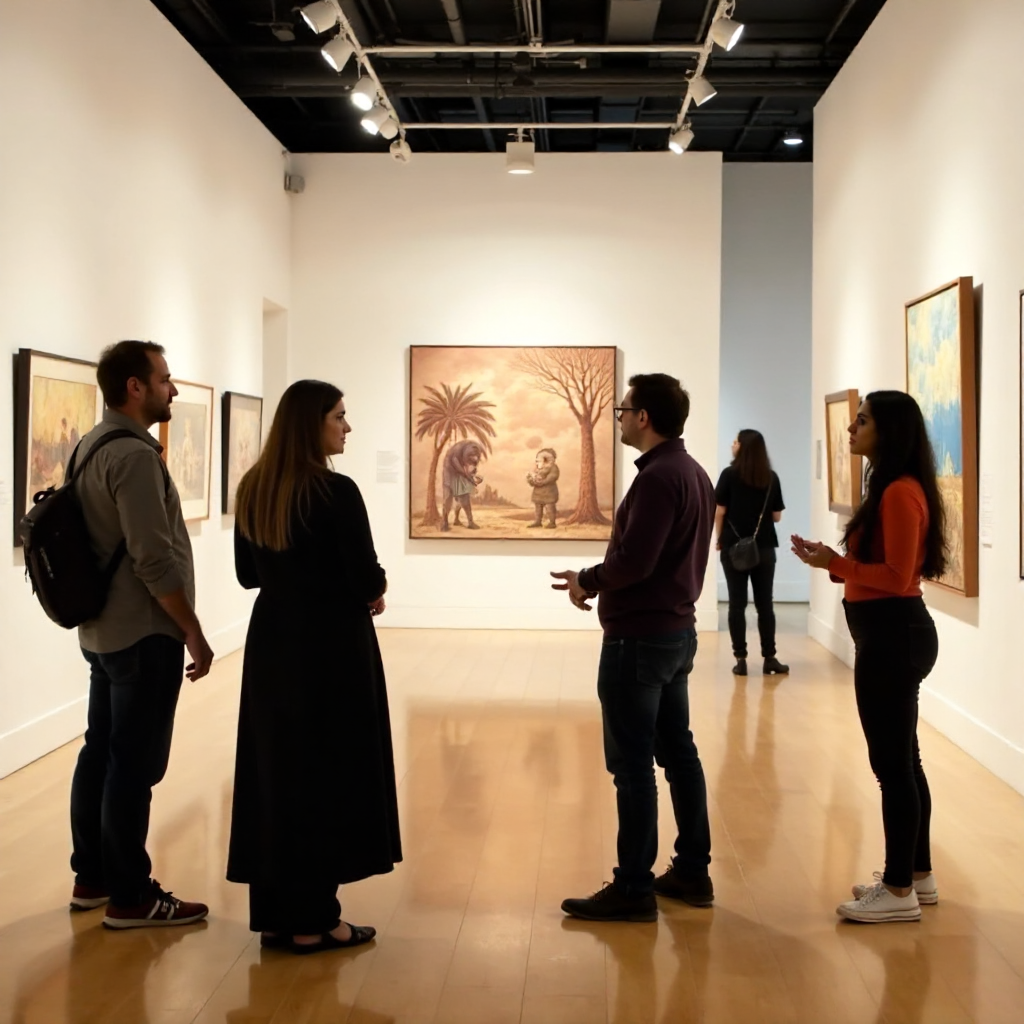
This approach shaped how exhibitions were arranged within the museum. Rather than organizing work by medium or chronology, the curatorial team grouped pieces thematically, allowing unexpected conversations to develop between very different artistic practices. A textile-based installation might sit alongside a video work; a sculptural piece might share space with documentary photography. The result was an exhibition environment that rewarded slow, attentive looking.
Artists on Their Creative Process and Inspiration
Featured artists at the Bihar Museum Biennale 2021 described their creative process in terms that consistently returned to research, site, and material — three anchors that grounded their work in something more specific than personal expression alone.
Several artists spoke about spending time in Bihar before finalizing their contributions. For them, the Biennale wasn't an occasion to import a finished body of work; it was an invitation to respond. One recurring theme in artist statements was the experience of arriving somewhere with assumptions and leaving with questions — a productive unsettling that fed directly into the work.
The relationship between contemporary art and traditional craft also surfaced repeatedly. Artists working in Bihar have access to extraordinarily rich visual traditions — Madhubani painting, Manjusha art, Sujni embroidery — and many of the featured artists were thinking carefully about how to engage with these traditions without appropriating or flattening them. The tension between admiration and critical distance is something serious artists navigate honestly, and the Biennale gave them space to do that publicly.
What emerges from these conversations is a picture of artistic practice as genuinely slow work. The installations and exhibitions visitors encountered during the Biennale represented months, sometimes years, of thinking — not just making.
Connecting Contemporary Art with Bihar's Cultural Heritage
Bihar's cultural heritage runs extraordinarily deep — from the Mauryan Empire and the ancient university at Nalanda to living traditions of folk art that have survived centuries of change. For featured artists, this depth was both a resource and a responsibility.
Artists who engaged most directly with Bihar's historical legacy tended to approach it archaeologically rather than decoratively. They weren't borrowing visual motifs for aesthetic effect; they were asking what those motifs mean now, who carries them, and what happens when they enter a contemporary museum context. That shift in venue — from village wall to museum gallery — changes the meaning of an image, and several artists made that transformation the explicit subject of their work.
The Bihar Museum's own collection provided another layer of dialogue. Artists who had access to the museum's holdings before the Biennale opened described the experience of encountering objects from Bihar's past as genuinely affecting — not in a sentimental way, but in a way that sharpened their sense of what they were doing and why. When your work hangs near a 2,500-year-old sculpture, you think differently about time.
This interplay between regional identity and contemporary expression is one of the things that distinguishes the Bihar Museum Biennale from art events held in metropolitan centers like Mumbai or Delhi. The location is not incidental — it's the point.
Reflections on Exhibiting at a Museum Biennale
Showing work in a museum context is different from exhibiting in a commercial gallery, and the featured artists at the Bihar Museum Biennale 2021 were thoughtful about that difference. Museum audiences arrive with different expectations — and often, different levels of prior art-world familiarity.
Several artists noted that they appreciated the interpretive infrastructure a museum provides: wall text, guided programming, educational materials. These tools allow work to speak to a broader audience without the artist having to simplify the work itself. You can make something genuinely complex and trust that the institution will help visitors find a way in.
At the same time, some artists described the challenge of scale and permanence that museum exhibitions impose. A Biennale installation can't be as provisional or process-based as work in a smaller, more experimental space. There's an expectation of completeness that doesn't always fit how artists actually think about their practice. Choosing what to show — and what to leave unresolved — becomes a curatorial decision the artist has to make about their own work.
The audience relationship was something artists returned to often. The Bihar Museum draws visitors from across the state, including many who may not regularly engage with contemporary art. Several featured artists described that as energizing rather than intimidating — a reminder that art doesn't only exist for people who already know how to talk about it.
The Role of Conferences and Public Programming
The Bihar Museum Biennale 2021 extended well beyond its galleries through a program of panels, artist talks, and academic conferences that gave the event intellectual depth and community reach. These sessions were not ancillary — they were central to what the Biennale was trying to do.
Featured artists participated in conversations that ranged from discussions of specific creative practices to broader debates about the role of museums in post-colonial societies. The conference programming brought together art historians, cultural critics, practicing artists, and museum professionals — a mix that generated friction in the best sense, pushing participants beyond their usual frameworks.
Public programming also included sessions designed for general audiences: walkthroughs, workshops, and conversations aimed at making the Biennale's themes accessible to visitors who weren't arriving with specialist knowledge. This commitment to accessibility without condescension is a marker of serious cultural institutions, and the Bihar Museum's approach here reflected genuine respect for its audience.
For artists, participation in these programs meant engaging with their work in real time, in front of people who might challenge, misread, or reframe it. That kind of live dialogue is irreplaceable — it changes how artists understand what they've made.
What the Bihar Museum Biennale Means for the Future of Regional Art
Events like the Bihar Museum Biennale matter because they shift where serious cultural conversation happens. For decades, the infrastructure of contemporary Indian art — galleries, collectors, critics, institutions — has been concentrated in a handful of metropolitan cities. The Bihar Museum Biennale is part of a broader effort to redistribute that infrastructure.
Featured artists spoke about the importance of this shift in practical terms. When a significant Biennale happens in Patna, it signals to younger artists from the region that they don't have to leave Bihar to be taken seriously. It creates local audiences for contemporary art. It builds relationships between the museum and the artistic community that persist long after the event closes.
The long-term significance of the 2021 edition may lie less in the specific works shown than in the precedent it sets. Cultural institutions in regional centers often struggle to assert their relevance against the gravitational pull of metropolitan art worlds. The Bihar Museum, through the Biennale, is making a case that relevance can be built from a specific place — that rootedness is a strength, not a limitation.
Artists who participated in the 2021 Biennale described leaving Patna with a sense that something genuinely important had happened — not just for their own careers, but for the broader ecology of contemporary Indian art. That's a rare feeling after an exhibition, and it suggests the Bihar Museum Biennale is doing something right.
Frequently Asked Questions
What is the Bihar Museum Biennale and how often does it take place?
The Bihar Museum Biennale is a recurring cultural event organized by the Bihar Museum in Patna, bringing together contemporary artists, curators, and academics for exhibitions, installations, and public programming. It takes place periodically, with the 2021 edition being one of its most significant iterations to date.
Who were the featured artists at the Bihar Museum Biennale 2021?
The 2021 edition featured a curated selection of artists working across installation, painting, sculpture, textile, and video — many with strong connections to regional Indian art traditions. Specific names and full participant lists are best confirmed through official Bihar Museum communications and documentation.
What themes were explored at the 2021 edition of the Biennale?
The 2021 Biennale explored themes centered on memory, place, cultural heritage, and the dialogue between contemporary artistic practice and Bihar's deep historical legacy. Artists engaged with regional identity, folk traditions, and the experience of making work in a specific, historically rich location.
How can visitors or readers access recordings or documentation of the artist interviews?
Documentation of the Bihar Museum Biennale 2021 — including recorded talks, artist statements, and conference proceedings — may be available through the Bihar Museum's official website or its social media channels. Contacting the museum directly is the most reliable way to access archival materials.
How does the Bihar Museum Biennale differ from other art biennales in India?
Unlike biennales held in major metropolitan centers, the Bihar Museum Biennale is explicitly rooted in a regional context. Its curatorial approach foregrounds Bihar's specific cultural heritage and invites artists to engage with that specificity rather than presenting work developed independently of place. This makes it a genuinely site-responsive event rather than a touring exhibition with a regional address.