Key Exhibitions and Highlights from the Bihar Museum Biennale 2021
The Bihar Museum Biennale 2021 brought together contemporary art, regional heritage, and intellectual discourse in a way that few events in India have managed. Held in Patna, the event positioned Bihar not just as a cradle of ancient civilization but as a living, evolving site of creative production. For anyone tracking the pulse of South Asian contemporary art, this edition was hard to ignore.
What Is the Bihar Museum Biennale?
The Bihar Museum Biennale is a recurring cultural event hosted by the Bihar Museum in Patna, designed to bridge contemporary art practice with the state's deep historical legacy. It functions simultaneously as an art showcase and a conference platform — part visual experience, part intellectual forum — drawing artists, curators, scholars, and general audiences under one roof.
Bihar Museum itself opened in 2015 and has since become one of India's most architecturally and curatorially ambitious institutions. The Biennale grew from the museum's broader mandate: to make Bihar's culture visible on national and international terms without erasing what makes it distinctly local. The 2021 edition continued that ambition.
Unlike larger commercial art fairs, the Biennale maintains a strong educational underpinning. Admission is designed to be accessible, and programming explicitly targets schools, colleges, and community groups — not just the art-world cognoscenti.
The Curatorial Vision Behind the 2021 Edition
The 2021 Biennale was shaped by a curatorial framework centered on dialogue between the historical and the contemporary — specifically, how living artistic practice can speak to, and sometimes challenge, inherited narratives about place and identity. Bihar carries enormous cultural weight: it is home to the ruins of Nalanda, the birthplace of several major religious traditions, and a region whose modern identity is often reduced to simplistic narratives about poverty or backwardness.
The curatorial team used this tension productively. Rather than staging a celebration of heritage for its own sake, the 2021 program asked harder questions: Who speaks for a region's culture? How do contemporary artists from Bihar navigate national and global art worlds while remaining legible to local audiences?
This approach gave the Biennale an intellectual edge that distinguished it from more celebratory regional art events. The result was a program that felt genuinely interrogative, not merely promotional — a distinction that resonated with both critics and participants.
Standout Exhibitions and Installations
The 2021 program featured a range of exhibitions spanning painting, sculpture, photography, and large-scale installation art, spread across the museum's galleries and some outdoor spaces. Several works used the museum's own collection as source material, creating a layered conversation between historical artifacts and new production.
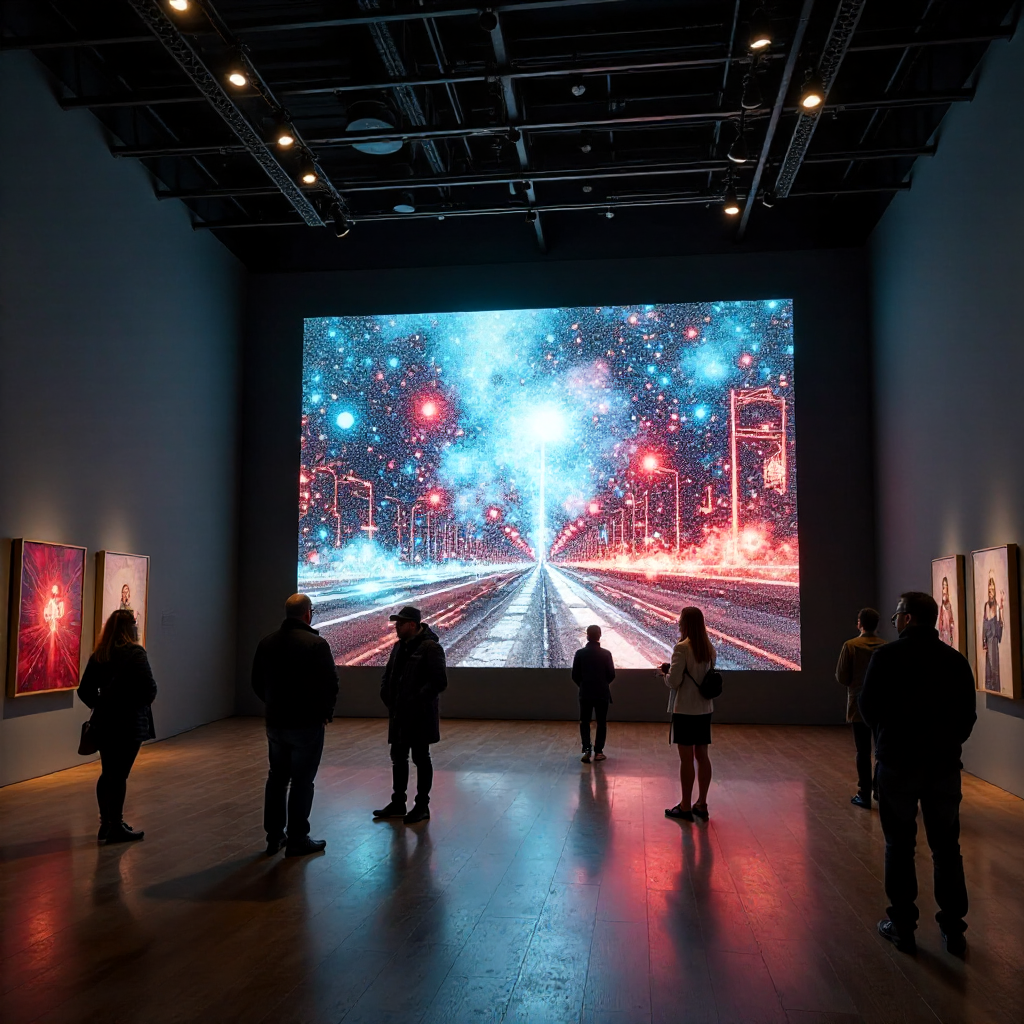
Among the most discussed presentations were site-specific installations that responded directly to Bihar's landscape and social fabric. Artists working with materials like terracotta, handmade paper, and natural dyes brought regional craft traditions into a contemporary exhibition context — not as ethnographic display but as active artistic choice.
Photographic exhibitions documenting rural Bihar attracted significant attention, particularly work that pushed back against documentary clichés. Rather than images of hardship, several photographers presented the region through its festivals, its architectural remains, and its everyday visual culture — a deliberate reframing.
Thematic showcases explored subjects including migration, ecological change along the Ganges, and the politics of memory. These weren't abstract themes: they were grounded in specific Bihar-based research, giving each exhibition a local specificity rarely found at more internationally oriented biennales.
Featured Artists and Curators
The 2021 Biennale brought together regional artists from Bihar and Jharkhand alongside national figures from Delhi, Mumbai, and Kolkata, with a smaller cohort of South Asian artists from beyond India's borders. This mix was deliberate — the curatorial team wanted to avoid both parochialism and the tokenism that can affect regionally focused events.
Several Bihar-based artists received their most prominent institutional platform through the Biennale, including practitioners working in traditional painting forms like Madhubani and Manjusha who were presented in dialogue with abstract and conceptual work. This juxtaposition was one of the program's defining gestures: it refused to segregate "folk" and "contemporary" art into separate hierarchies.
Guest curators contributed significantly to the program's range. Their presence brought outside perspectives while the core curatorial team ensured those perspectives remained accountable to the local context. This balance between openness and rootedness is difficult to achieve and was one of the 2021 edition's genuine strengths.
Conferences, Talks, and Public Programming
Beyond the galleries, the 2021 Biennale hosted a substantial program of museum conferences, panel discussions, and public talks that ran parallel to the exhibitions. These events addressed art history, curatorial practice, museum education, and cultural policy — with particular attention to how institutions in smaller Indian cities can build sustainable cultural ecosystems.
Sessions on digital access and museum outreach were especially timely given the constraints of the pandemic period. The 2021 Biennale navigated the Covid-19 context carefully, incorporating hybrid formats that extended reach beyond physical attendees in Patna.
- Panel discussions on contemporary art from eastern India and its representation in national narratives
- Workshops for students and young practitioners on curatorial methods and exhibition-making
- Public lectures connecting Bihar's archaeological record with current creative practice
- Roundtables on museum education and community engagement strategies
The educational programming was arguably as important as the exhibitions themselves. Bihar Museum has consistently invested in community engagement initiatives that treat local audiences as participants rather than passive visitors — and the Biennale amplified that commitment. Schools from across Patna and neighboring districts brought students in organized visits, many of whom encountered large-scale contemporary installation art for the first time.
Bihar Museum as a Cultural Hub
Bihar Museum's role extends well beyond storing and displaying objects. The institution has positioned itself as an active agent in shaping how Bihar's culture is understood — both within the state and by outside audiences. The Biennale is the clearest expression of that ambition.
The museum's permanent collection spans several thousand years of Bihar's history, from Mauryan-era artifacts to medieval bronze sculptures. Placing a contemporary art biennale within that context creates productive friction. Visitors moving between the permanent galleries and the Biennale exhibitions encounter a version of Bihar that is simultaneously ancient and urgently present.
Architects and museum professionals have noted the building itself — designed by Maki and Associates in collaboration with local firms — as an unusually successful example of a contemporary museum in a non-metropolitan Indian setting. The spatial design supports large installations without overwhelming smaller, more intimate works. This flexibility was used well in 2021. For more on South Asian museum development, Bihar Museum's Wikipedia entry offers useful institutional background.
Why the 2021 Biennale Mattered
The 2021 edition mattered because it demonstrated that a serious, critically engaged biennale does not require a metropolitan address. Patna is not Delhi or Mumbai. Bihar does not have the infrastructure of cultural patronage that larger cities do. And yet the Biennale produced programming that could hold its own in any serious conversation about contemporary art in India.
It also mattered for what it said about cultural identity. Bihar is one of India's most politically and historically complex states — a place where ancient prestige and modern marginalization coexist. The Biennale created space for artists and thinkers to engage with that complexity honestly, without either defensiveness or performance.
For the India art scene broadly, events like this shift the center of gravity. They make the argument, through practice rather than rhetoric, that South Asian contemporary art is not a Delhi-Mumbai-Kolkata triangle with everything else peripheral. Bihar, through its museum and its Biennale, is actively rewriting that map.
Frequently Asked Questions
When and where did the Bihar Museum Biennale 2021 take place?
The Bihar Museum Biennale 2021 took place at the Bihar Museum in Patna, the capital of Bihar, India. The event was held during 2021 with programming spread across several weeks to accommodate both exhibitions and conference events.
What was the central theme of the 2021 Biennale?
The 2021 edition focused on the dialogue between historical legacy and contemporary practice, specifically exploring how artists engage with Bihar's cultural identity in ways that challenge simplified narratives about the region.
Which types of art and exhibitions were featured?
The Biennale featured installation art, photography, painting, sculpture, and thematic group exhibitions. It included works in both traditional regional forms — such as Madhubani and Manjusha — and contemporary conceptual and abstract practices, presented in deliberate dialogue with each other.
Were there any educational or conference events alongside the exhibitions?
Yes. A substantial program of museum conferences, panel discussions, public lectures, and student workshops ran alongside the exhibitions. These events addressed curatorial practice, art history, museum education, and cultural policy, with some sessions offered in hybrid formats.
How does the Bihar Museum Biennale compare to other Indian art biennales?
The Bihar Museum Biennale is distinctive for its strong integration of educational programming with visual art, and for its explicit focus on regional cultural identity. It operates at a smaller scale than events like the Kochi-Muziris Biennale but maintains a serious curatorial ambition and has built a credible reputation within India's art world for the quality and specificity of its programming.